D2C brands rely too much on discounts
Flat sales. Festive offers. Flash deals. Many D2C brands end up training customers to wait for the next discount instead of buying because they want the product. This boosts short-term orders but quietly eats margins and weakens brand value.
Why Repeat Customers Are More Profitable Than New Ones
Getting a new customer is expensive and getting their attention is even harder. Repeat customers already trust the brand, buy faster, and spend more over time. Retention is not just cheaper growth. It is smarter growth.
WhatsApp as a High-Attention, Trust-Based Channel for Retention
WhatsApp is where customers actually read and respond. No clutter, no spam feeling, just direct conversations. For D2C brands, it turns routine messages into relationship-building moments that drive repeat purchases naturally.
Why WhatsApp Works Better Than Email for Retention
1 Where Customers Actually Pay Attention
Email used to be the king of retention. Today, most brand emails live a quiet life in the Promotions tab, unopened and ignored. Customers do not wake up excited to read another “Special Offer Inside” subject line. WhatsApp, on the other hand, sits right next to messages from friends, family, and coworkers. When a message arrives there, it gets seen.
For D2C brands, this difference is massive. WhatsApp messages feel urgent, personal, and relevant. Customers open them because they expect something useful, not because they are hunting for discounts.
2 High Open and Response Rates Compared to Email
WhatsApp consistently delivers much higher open and reply rates than email marketing. While emails struggle to cross basic engagement benchmarks, WhatsApp messages are opened within minutes.
Think about your own behavior. You may ignore emails for days, but you rarely ignore a WhatsApp message. That habit alone makes WhatsApp a powerful customer retention channel for D2C brands.
Why this works better:
- Messages are opened quickly, often within minutes
- Customers are more likely to reply or take action
- Fewer messages mean less competition for attention
3 Direct, Personal, and Instant Communication
Email feels like a broadcast. WhatsApp feels like a one-on-one chat. That difference changes how customers react.
A WhatsApp message saying, “Hey, your skincare order has been delivered. Want tips to get better results?” feels helpful. The same message in an email feels like marketing. Instant delivery and real-time replies make WhatsApp ideal for follow-ups, support, and reorders.
What D2C brands gain here:
- Real-time conversations with customers
- Faster support and issue resolution
- Higher trust due to human-like interaction
4 Feels Like a Conversation, Not a Promotion
No one likes being sold to. But everyone is okay with being helped.
WhatsApp allows brands to talk like humans, not advertisers. A simple message like, “Running low on your protein powder?” sounds natural. Compare that to an email headline screaming, “BUY NOW BEFORE STOCK RUNS OUT.” One builds loyalty, the other builds resistance.
Why customers prefer this:
- Messages feel casual and friendly
- Less promotional pressure
- Stronger emotional connection with the brand
Using Order Updates to Build Trust, Not Just Inform
1 Order Updates Are More Than Notifications
For D2C brands, order updates are often the first interaction after payment. Clear, timely WhatsApp updates reduce anxiety and instantly build trust. With triochat.io, these messages stay automated but still feel personal.
2 Shipping, Delivery, and Confirmation Messages
Customers want clarity, not silence. WhatsApp updates answer the most common question before it is even asked: “Where is my order?”
What works best:
- Instant order confirmation
- Real-time shipping and delivery updates
- Easy reply option for support
3 Add Helpful Tips, Not Sales Talk
After delivery, customers are most curious. This is the perfect time to help, not sell.
Simple examples:
- “Pro tip: Use your face cream on damp skin for better results.”
- “First wash tip: Cold water keeps the fabric fresh longer.”
triochat.io lets brands trigger these tips automatically based on the product purchased.
4. How Trust Turns Into Repeat Purchases
When brands stay helpful, customers feel cared for. That trust leads to repeat orders naturally, without discounts or pressure.
Why it works:
- Stronger brand trust
- Fewer support issues
- Higher chances of reorders
Order updates are small messages, but when done right through WhatsApp and tools like triochat.io, they quietly drive long-term loyalty.
Personalized Follow-Ups That Feel Human
1. Talk to Customers, Not at Them
Most follow-ups fail because they sound like announcements. WhatsApp works when messages feel like a real conversation. A simple “How’s the product working for you?” feels human. With triochat.io, brands can automate these messages while still keeping them personal and well-timed.
2. Product-Specific Follow-Ups After Delivery
One-size-fits-all follow-ups do not work. Customers expect relevance.
What works better:
- Skincare tips for skincare buyers
- Fit or care tips for fashion buyers
- Usage timing for supplements
triochat.io helps trigger these messages automatically based on what the customer ordered.
3. Simple Feedback, Real Replies
Long feedback forms get ignored. Short questions get answered.
Examples:
- “Quick check: enjoying the product so far?”
- “Need any help with usage?”
These small questions open conversations and build trust.
4. Suggest Smart, Relevant Products
Instead of pushing offers, suggest products that actually make sense after the first purchase.
Why this works:
- Feels helpful, not salesy
- Higher chances of repeat purchases
- Builds long-term loyalty
Personalized WhatsApp follow-ups through triochat.io turn one-time buyers into repeat customers, without discounts and without noise.
Reordering Made Effortless
1. When Buying Again Takes One Tap
Most repeat purchases do not fail because customers dislike the product. They fail because reordering feels like work. Logging in, searching again, adding to cart. Too many steps. WhatsApp removes this friction. A simple message at the right time can bring customers back instantly.
With triochat.io, D2C brands can send smart, automated reorder messages that let customers buy again in just one tap.
2. One-Tap Reorder on WhatsApp
Reordering should feel as easy as replying “Yes.”
How it works:
- WhatsApp message with a direct reorder link
- No login or searching required
- Fast checkout experience
It is like reminding someone their favorite snack is back in the kitchen.
3. Smart Reminders for Consumable Products
Customers rarely track when a product is about to run out. But brands can.
Whether it is skincare, supplements, or personal care, WhatsApp reminders sent at the right time feel helpful, not annoying. triochat.io allows brands to schedule these reminders based on purchase cycles.
Examples:
- “Looks like your face cream might be running low.”
- “Time to restock your protein?”
4. Why Convenience Beats Discounts
People will pay full price if buying is easy. Convenience reduces decision fatigue and removes excuses.
Why this drives repeat purchases:
- Less effort for customers
- Faster buying decisions
- Stronger habit formation
In the long run, friction-free reordering through WhatsApp and tools like triochat.io builds loyalty far better than heavy discounts ever could.
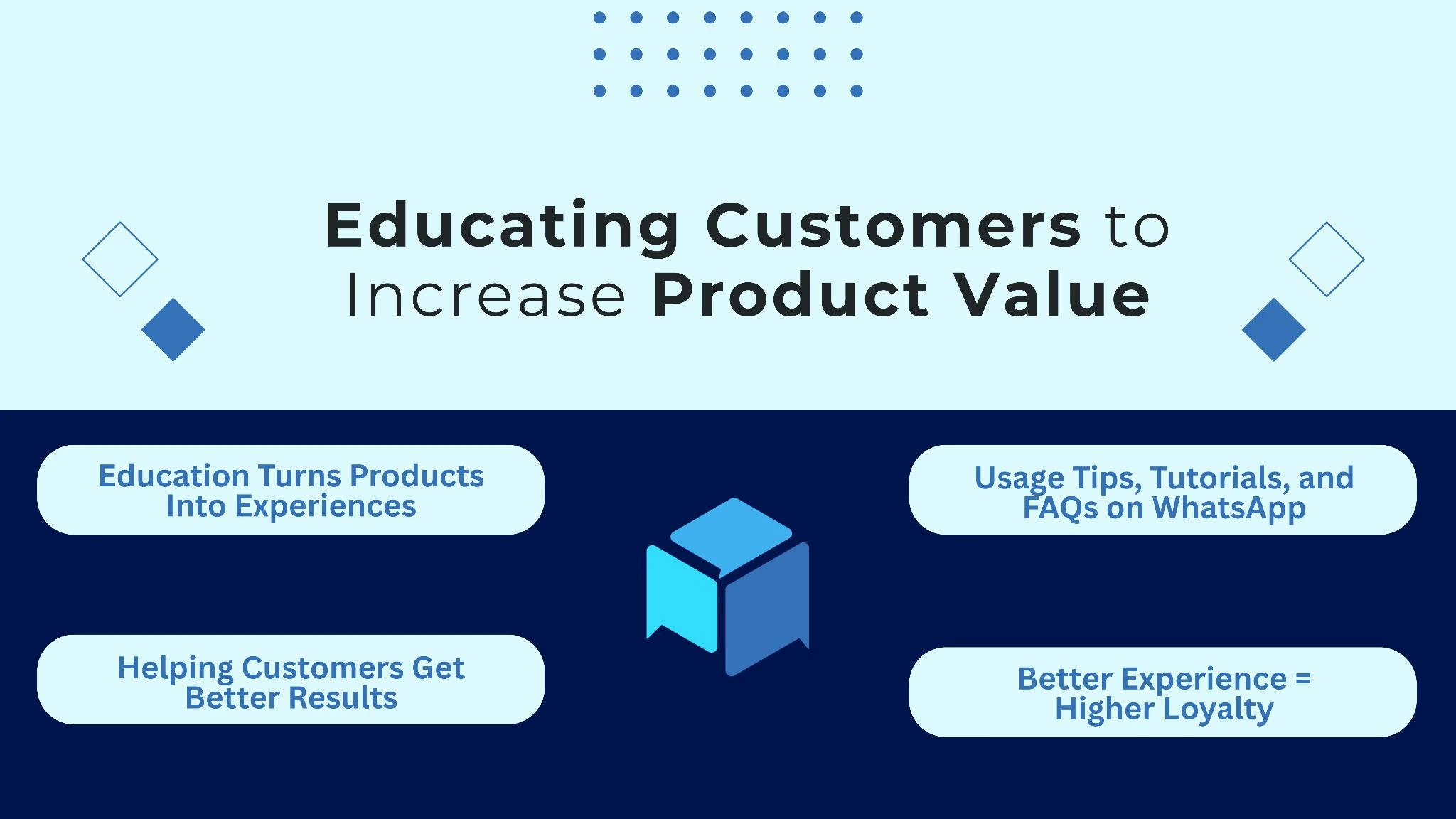
Educating Customers to Increase Product Value
1. Education Turns Products Into Experiences
Many customers stop using products not because they are bad, but because they are used incorrectly. WhatsApp gives D2C brands a simple way to educate customers right after purchase. With triochat.io, brands can automate helpful messages that improve how customers actually use the product.
2. Usage Tips, Tutorials, and FAQs on WhatsApp
Customers rarely read long manuals, but they do read WhatsApp messages.
What works well:
- Short usage tips after delivery
- Quick how-to videos or image guides
- Simple answers to common FAQs
A message like “Use just a pea-sized amount” saves more trouble than a full instruction page.
3. Helping Customers Get Better Results
When customers see results, they stick around. Educating them at the right time helps them get maximum value from the product without needing extra support.
Examples:
- Skincare tips to avoid overuse
- Fitness product timing suggestions
- Care tips to extend product life
4. Better Experience = Higher Loyalty
Customers who understand a product trust the brand behind it. That trust leads to fewer complaints, better reviews, and repeat purchases.
Why this works:
- Customers feel guided, not confused
- Better results increase satisfaction
- Loyalty grows without discounts
By using WhatsApp education flows through triochat.io, D2C brands turn simple products into long-term customer relationships.
Conclusion: WhatsApp as a Retention Engine for D2C Brands
Repeat purchases are not built on discounts. They are built on trust, timing, and convenience. WhatsApp helps D2C brands stay close to customers through order updates, helpful follow-ups, education, and easy reordering. With triochat.io, all of this happens at scale without losing the human touch.
So here’s a simple question. If your customers live on WhatsApp, why is your retention strategy not there yet?
Start turning everyday conversations into repeat purchases with triochat.io.