
“Smart selling is not about pushing harder. It’s about understanding your customer better.” This line from Jeff Bezos sets the tone for how modern businesses should think. Today, selling smarter starts with choosing the right platform, and WhatsApp has become that place for millions of brands.
With one of the largest active user bases in the world, WhatsApp gives businesses direct access to customers without any extra layers. People already use it daily, so reaching them feels natural. There’s no learning curve, no complex dashboard and no extra setup for customers.
The platform is simple, quick and built for real conversations. Features like catalogs, quick replies and automated messages make the buying journey smooth. Customers can explore products, ask questions and place orders in the same chat they use with friends.
WhatsApp also supports media-friendly selling. You can share product photos, videos, voice notes or even demo clips instantly. This helps customers make faster decisions and keeps the interaction personal.
In this guide, we’ll break down WhatsApp’s commerce policy in a clear and simple way. You’ll learn how to scale your business, use the platform confidently and stay compliant while selling smarter. Let’s get started.
Overview of WhatsApp Commerce Policy
WhatsApp has built a structured set of rules to keep buying and selling safe for both customers and businesses. Before you start selling, it’s important to understand how these guidelines shape the way you operate on the platform.
What These Rules Cover
WhatsApp’s policy touches every part of the selling process. It explains which products and services are allowed, the right way to accept payments and how to interact with customers responsibly. It also outlines how businesses should use customer information without misusing or overstepping boundaries.
Here’s a simple breakdown:
-
Allowed and restricted items: WhatsApp clearly defines what businesses can promote and what falls under banned or sensitive categories.
-
Transaction options: The platform supports safe payment routes, and sellers are expected to use methods that keep customer data secure.
-
Customer conversations: Brands must follow healthy communication practices, avoid spam and respond in a way that builds trust.
-
Data handling: Any customer details collected through chats must be protected and used only for the service the customer agreed to.
Why These Guidelines Matter
These rules help create a safe and transparent environment for both sides. When businesses follow them, it reduces the chance of account restrictions and ensures customers feel comfortable buying through WhatsApp. It also keeps communication clear, prevents misuse of personal information and builds long-term credibility. Following these standards isn’t just about avoiding penalties. It helps businesses run smoother, earn trust faster and scale without worrying about sudden blocks or compliance issues.
General Guidelines Every Business Should Follow
When you use catalogs, product listings or any commerce feature on WhatsApp, you must follow all platform rules along with Meta’s wider commerce terms. These guidelines help keep your selling process clean, safe and trustworthy.
Your Responsibilities as a Seller
Running a business on WhatsApp means you handle your own terms and customer commitments. You decide how your returns work, what your delivery timeline looks like and how you display your pricing. WhatsApp doesn’t take part in the actual sale, payment or delivery.
Here are a few things businesses must manage on their own:
- Set clear policies for returns, refunds and shipping.
- Share accurate pricing and product details with customers.
- Handle payments and order fulfillment independently.
- Manage and report all taxes, fees and duties connected to your sales.
Items That Aren’t Allowed
WhatsApp restricts certain products to protect users and comply with laws. What’s banned can differ across regions, but the overall intent stays the same: keep the platform safe for buyers.
Some commonly blocked categories include:
- Weapons, harmful tools or ammunition
- Tobacco and related items
- Alcohol-led products
- Adult goods or services
- Animal sales
- Gambling or betting services
- Pirated or unauthorized digital media
- Direct medical product sales
- Pyramid or multi-level marketing
- Paid dating services
- Fake or unverified digital currencies
These are just examples and not the complete list. Rules may change based on your location and industry.
Activities You Must Avoid
Beyond products, some practices are strictly off-limits on WhatsApp.
Watch out for these actions:
- Selling or promoting illegal or restricted items
- Sharing adult or explicit material
- Running scams, misleading promotions or fake offers
- Spamming customers or harassing users
- Using other brands’ trademarks without permission
- Mishandling or misusing customer data
Important Principles to Follow
WhatsApp expects businesses to communicate in a fair and respectful manner.
Keep these points in mind:
- Make sure all your content and offers are honest and not misleading.
- Avoid targeting or pressuring people based on personal traits like religion, language or community.
- Don’t use rude or offensive language in any message.
- Message users only after they opt in and agree to receive updates.
- Stop messaging immediately if a customer doesn’t want further communication.
These guidelines help you stay compliant and maintain a healthy relationship with your audience. Let me know when you’re ready for the next section.
Businesses That Can Sell Comfortably on WhatsApp
WhatsApp is open to a wide range of industries as long as they follow its rules. The platform is built for everyday conversations, which makes it suitable for both product-based brands and service-driven companies. Here’s a clearer look at the kinds of businesses that can use WhatsApp for selling and customer support.
Retail and Everyday Consumer Brands
These are the most common businesses using WhatsApp to showcase products, share catalogs and handle orders.
They include:
- Clothing and lifestyle labels
- Home décor and daily-use goods
- Jewelry, accessories and custom gift stores
- Food outlets, cloud kitchens and snack brands
- Electronics, gadgets and small appliances
- Pet essentials like toys, treats and care items
Health, Wellness and Medical Services
Many healthcare providers use WhatsApp for appointments, updates and support. While selling medicines directly is restricted, guidance and service-based conversations are allowed.
Businesses in this category include:
- Doctors and clinics
- Hospitals and specialty centers
- Wellness products and supplement providers
- Digital healthcare platforms
- Family planning support services
Financial, Legal and Professional Services
Service businesses use WhatsApp to share information, respond to queries and manage client communication.
This group covers:
- Banks, investment firms and insurance providers
- Legal advisors and consultants
- Chartered accountants and financial planners
Education, Non-Profits and Learning Platforms
Organizations that rely on communication and community-building fit well on WhatsApp.
Examples include:
- Schools, coaching centers and universities
- NGOs, foundations and charitable groups
Tech, Telecom and Digital Services
These companies use WhatsApp to offer fast support, onboarding and service reminders.
This includes:
- IT service providers
- Software and app-based platforms
- Telecom and broadband companies
Automobiles, Real Estate and Utility Services
Businesses offering high-involvement products use WhatsApp for lead generation, updates and customer care.
They include:
- Car dealers and automotive service centers
- Manufacturing units
- Real estate agents and property management firms
- Energy and utility service providers
Lifestyle, Personal Care and Specialized Providers
These brands use WhatsApp to stay connected with their customers on a day-to-day basis.
Common examples:
- Fitness and wellness brands
- Grooming services for pets
- Veterinary clinics
- Travel, tour and transport services
- Religious or community-based organizations
- Training centers, including safety or certification programs
These categories give a clear idea of who can run commerce on WhatsApp. If your brand provides a legal product or service and communicates responsibly, the platform offers plenty of room to grow. Let me know when you’re ready for the next heading.

Using WhatsApp Commerce the Right Way
Using WhatsApp for business works best when you keep things simple, transparent and respectful. The goal is to make the customer’s experience smooth without overwhelming them. Here are a few practices that help you stay responsible on the platform.
Share clear and simple details
Customers should easily understand what you’re offering. Keep your pricing, product features and delivery terms upfront so there’s no confusion later. Clear information builds trust and reduces back-and-forth messages.
Always get permission before messaging
Before you start sending updates or promotions, make sure the user has opted in. Consent keeps your communication clean and protects your account from complaints or blocks. It also helps customers feel in control of the conversation.
Stay helpful, not pushy
Send updates that are actually useful, like order alerts or product reminders, but avoid sending too many messages. Being consistent is good, but being spammy can hurt your brand and lead to users opting out.
Protect customer data
Any information shared by a customer should be handled with care. Store it securely and use it only for the purpose they agreed to. Good data habits show professionalism and help maintain long-term trust.
What Happens When a Business Breaks WhatsApp’s Commerce Rules
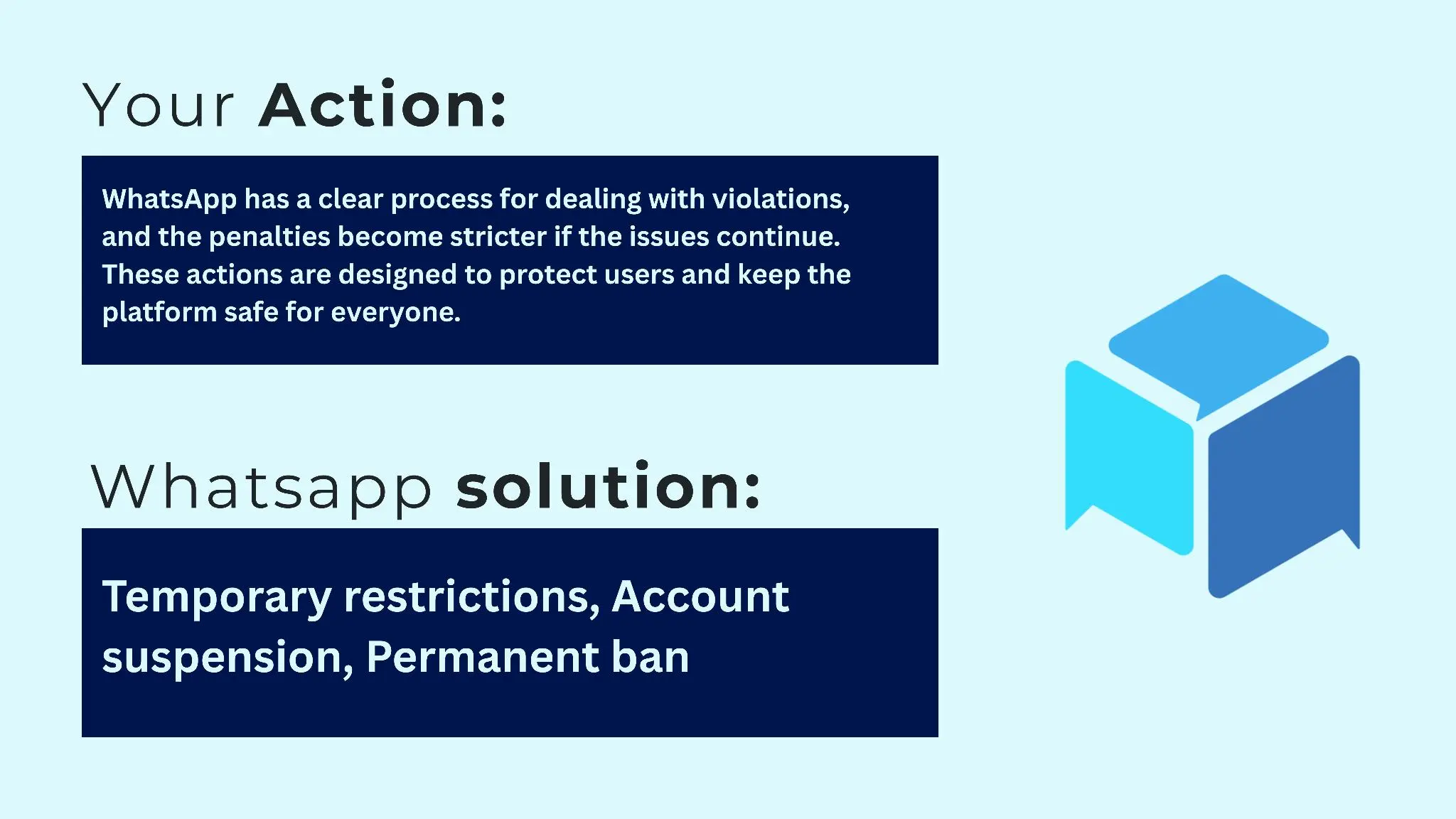
WhatsApp has a clear process for dealing with violations, and the penalties become stricter if the issues continue. These actions are designed to protect users and keep the platform safe for everyone.
Temporary restrictions
For lighter violations, WhatsApp may place short-term limits on the account. These restrictions can last 1, 3, 5, 7 or even 30 days. During this time, you can’t start new marketing conversations or add new phone numbers. It’s usually the first warning to correct the problem.
Account suspension
If the violation is serious or repeated, WhatsApp may suspend the account completely. In this stage, you can’t initiate new chats at all. To regain access, you must submit a review request, and conversations resume only after WhatsApp approves it. The suspension period depends on the case and may last several days until the review is cleared.
Permanent ban
If a business continues breaking policies even after warnings and suspensions, WhatsApp may issue a permanent ban. This removes the business from the WhatsApp Business Platform with no timeline for return. Once banned, recovery is rare and the business loses all WhatsApp-based selling and communication options.
New Trends Shaping the Future of WhatsApp Commerce
WhatsApp commerce is becoming smarter and more advanced as businesses start blending technology with personal communication. It’s moving from simple chats to a complete shopping and support experience.
Linking WhatsApp with online stores
Many brands now connect their e-commerce websites with WhatsApp to make shopping faster and more convenient.
Here’s what this trend brings:
- Customers can browse products and ask questions in the same chat
- Businesses can share carts, track orders and send real-time updates
- Support becomes quicker and more human
Using AR and smart devices for better experiences
Augmented Reality and IoT tools are helping brands make shopping more interactive.
This includes:
- Virtual product try-ons or previews
- Smart device alerts for orders or restocks
- More personalized recommendations based on user activity
Creating content that feels local
Localized communication is becoming a strong trend on WhatsApp.
Businesses are now focusing on:
- Using regional languages and local-style messaging
- Sharing offers based on customer location
- Personalizing product suggestions for different user groups
Build Smarter WhatsApp Commerce With triochat
WhatsApp has become one of the strongest places for modern commerce, but growing on the platform requires clarity, compliance and consistency. When you follow the rules, keep communication clean and use the right tools, the results can scale fast.
This is where triochat makes the biggest difference. It helps businesses automate their messages, manage customer chats in one place and stay fully aligned with WhatsApp’s guidelines. You can send updates on time, handle large volumes of queries and maintain a smooth shopping experience without worrying about policy mistakes.
With triochat, your business becomes more organized, responsive and secure. It gives you the structure you need to sell confidently on WhatsApp while keeping every interaction simple and customer-friendly. If you want to grow smarter and stay compliant at the same time, triochat is the best partner to have by your side.